I just got back from this amazing production of Shakespeare's A Midsummer Night's dream directed by Tim Supple and featuring an Indian/Sri Lankan cast. It was performed half in English and half in various Indian dialects like Hindi, Bengali, Sinhalese and Sanskrit.
First of all the production design was visually stunning; there were live musicians playing Indian instruments and I found that the incorporation of Indian cultural elements like song and dance actually made the "fantasy" elements of the play a lot more organic and flowing.
I was amazed at how amazingly multi-disciplinary the cast was, not only were they required to deliver Shakespeare (which they did with a passion, emotion and raw sexual energy I've not seen in any Western Shakespearean production) and to be able to dance and sing but the staging also incorporated a lot of physical/aerial acrobatic elements. They had a climbing wall as the back drop and the actors would scamper up and down as they delivered lines.
The performance also featured quite a bit of web and aerial silks skills but they were incorporated into the staging, the "fairy" characters would use them to descend from the back wall or swing out, or they were used as hammocks for when the characters slept.
I thought it was so awesome that the actress playing Titania (Queen of the Fairies) would deliver her full Shakespearean monologue then climb up a strand of silks.
There were also a few abstract scenes where the artists did roll downs and other tricks on the webs and silks. It was amazingly well-done and completely flowed with the action of the play.
It was very avant-garde but also surprisingly accessible, I don't remember the last time the audience was on their feet dancing and rhythmically clapping along at the end of Shakespearean play performance.
Check out the video trailer at the show's website: http://www.dreamonstage.co.uk/ it gives you a sense of the energy and visual splendor of the production.
Sunday, November 2, 2008

Thursday, October 9, 2008
Boom de ya da!
This new Discovery Channel commercial makes me happy. It's cute, catchy and makes me feel warm and fuzzy inside whenever I watch it.
Tuesday, September 30, 2008
Pomegranate
So I was walking to work this morning when this random guy on the street gave me a free pomegranate . . .
 Um, okay . . .
When I got to work I put it on my desk and then I noticed there was this sticker on it advertising a website:
http://www.pomegranatephone.com
Take a minute to click the link and explore the site, it's highly entertaining and a great example of guerilla marketing.

When I got to work I put it on my desk and then I noticed there was this sticker on it advertising a website:
http://www.pomegranatephone.com
Take a minute to click the link and explore the site, it's highly entertaining and a great example of guerilla marketing.
Monday, September 22, 2008
Blue Man Group in Concert - Thoughts and Analyses
I was really moved by some of the music and imagery in the Blue Man Group's concert last night in a way that I didn't expect to be.
To start BMG based their concert on a concept album they released a few years ago called The Complex; a dark, social commentary with themes of modern isolation and alienation, individuality versus conformity, information overload and the paradox of the information age. These themes really speak to me and they're explored really well in the concert.
What Blue Man Group did for the Complex and subsequent arena rock tour was take the iconography from their resident stage shows (the wacky invented instruments, the psychedelic projections, the characters like the Shadows and the Wire Men) and added to these icons and expanded them to express the themes of the show by visually supporting the music and lyrics. They basically took the essence of Blue Man Group and expanded it while maintaining the Blue Man's original spirit.
Here are some of my favourite songs and images from the concert:
Sing Along: The first single released from The Complex, the album version featured Dave Matthews on vocals. The song is catchy and the lyrics are simple but they really serve to illustrate the individuality versus conformity theme; "If I follow along will it mean I belong, or will I keep on feeling different from everybody else?"
Up to the Roof: Sung by the tour's powerhouse female vocalist named Adrian Hartley, I can really relate to the lyrics of this particular song. It's sung from a point of view of a person who's been trained to follow rules about what to do, where to go and what to believe. I draw a parallel to the dogma of organized religion or societal/familial pressures. The song's basically about rebelling against those rules and dogmas and making the decision to follow your own intuition and decide your own fate. One lyric speaks to me especially profoundly, it's a metaphor about the stairs the singer was told to take not leading her anywhere so she decided to take the fire escape to the roof instead, "I'd rather look at the sky than wonder why I let you take my time." I love it for its "fuck you" attitude to authority.
There are several particularly striking songs (both musically and lyrically) that explore the isolation and alienation fostered by the compartmentalization and separation that individuals experience in modern society and by the kind of artificial coping mechanisms we develop to survive in our society;
Persona is a haunting song about how we innately compartmentalize our personalities and create false images to fool others and even ourselves into believing certain things about ourselves. The singer's mournful moaning in between verses suggests that he's longing to stop hiding his true self but fears the vulnerability that exposing himself can create.
Shadows Part 2: The title is a reference to the track "Shadows" on BMG's first album (the soundtrack to their resident stage shows). In the concert the song is explained as "Taking the audience on a Jungian journey into the collective unconscious by using the shadow as a metaphor for the primal self that gets repressed by the modern persona and also by using an underground setting and a labyrinth office design to represent both the depths of the human psyche and the dungeon-like isolation of our increasingly mechanistic society which prevents people from finding satisfying work or meaningful connections with others" That pretty much sums it up. The song features an awesome "scratch war" except the "scratching" is done by two performers on Airpoles, one of BMGs invented instruments consisting of a flexible fibreglass antenna that makes an acute "swish" sound when whipped through the air, the dexterity it takes to do an airpole battle that sounds like a DJ scratching must be enormous.
The same theme of being crushed under the monotony of daily life is again expressed in the album's title song, The Complex, the lyrics vividly illustrate the maddening monotony of the daily grind. It could be an anthem to anybody stuck in a job they hate. "I saw my picture on the bathroom door today . . . So far in, I can't get out". It brilliantly illustrates the tragic mindset of someone who's abandoned the pursuit of his dreams and settled in a nine-to-five desk job but yearns for something more. At the climax of the song they showed a movie of all these office-dweller-type characters emerging onto the rooftops of the city and looking up at the sky, finally re-connecting with something primordial. The image really got to me.
But of course, the show is not all dark, moody explorations, most of it is actually light and fun. The BMG also does brilliant covers of The Who's Baba O'Riley and Donna Summer's I Feel Love, in both cases replacing the electronic synthesizers with their acoustic PVC pipe instrument. The PVC sounds amazing imitating the fast synthesizer arpeggios of these songs.
In the end everybody in the audience is jumping up and down together in unison in this artificial construct of the rock concert environment we manage a transcendent experience of coming together as a group . . . if only for the duration of the song.
To start BMG based their concert on a concept album they released a few years ago called The Complex; a dark, social commentary with themes of modern isolation and alienation, individuality versus conformity, information overload and the paradox of the information age. These themes really speak to me and they're explored really well in the concert.
What Blue Man Group did for the Complex and subsequent arena rock tour was take the iconography from their resident stage shows (the wacky invented instruments, the psychedelic projections, the characters like the Shadows and the Wire Men) and added to these icons and expanded them to express the themes of the show by visually supporting the music and lyrics. They basically took the essence of Blue Man Group and expanded it while maintaining the Blue Man's original spirit.
Here are some of my favourite songs and images from the concert:
Sing Along: The first single released from The Complex, the album version featured Dave Matthews on vocals. The song is catchy and the lyrics are simple but they really serve to illustrate the individuality versus conformity theme; "If I follow along will it mean I belong, or will I keep on feeling different from everybody else?"
Up to the Roof: Sung by the tour's powerhouse female vocalist named Adrian Hartley, I can really relate to the lyrics of this particular song. It's sung from a point of view of a person who's been trained to follow rules about what to do, where to go and what to believe. I draw a parallel to the dogma of organized religion or societal/familial pressures. The song's basically about rebelling against those rules and dogmas and making the decision to follow your own intuition and decide your own fate. One lyric speaks to me especially profoundly, it's a metaphor about the stairs the singer was told to take not leading her anywhere so she decided to take the fire escape to the roof instead, "I'd rather look at the sky than wonder why I let you take my time." I love it for its "fuck you" attitude to authority.
There are several particularly striking songs (both musically and lyrically) that explore the isolation and alienation fostered by the compartmentalization and separation that individuals experience in modern society and by the kind of artificial coping mechanisms we develop to survive in our society;
Persona is a haunting song about how we innately compartmentalize our personalities and create false images to fool others and even ourselves into believing certain things about ourselves. The singer's mournful moaning in between verses suggests that he's longing to stop hiding his true self but fears the vulnerability that exposing himself can create.
Shadows Part 2: The title is a reference to the track "Shadows" on BMG's first album (the soundtrack to their resident stage shows). In the concert the song is explained as "Taking the audience on a Jungian journey into the collective unconscious by using the shadow as a metaphor for the primal self that gets repressed by the modern persona and also by using an underground setting and a labyrinth office design to represent both the depths of the human psyche and the dungeon-like isolation of our increasingly mechanistic society which prevents people from finding satisfying work or meaningful connections with others" That pretty much sums it up. The song features an awesome "scratch war" except the "scratching" is done by two performers on Airpoles, one of BMGs invented instruments consisting of a flexible fibreglass antenna that makes an acute "swish" sound when whipped through the air, the dexterity it takes to do an airpole battle that sounds like a DJ scratching must be enormous.
The same theme of being crushed under the monotony of daily life is again expressed in the album's title song, The Complex, the lyrics vividly illustrate the maddening monotony of the daily grind. It could be an anthem to anybody stuck in a job they hate. "I saw my picture on the bathroom door today . . . So far in, I can't get out". It brilliantly illustrates the tragic mindset of someone who's abandoned the pursuit of his dreams and settled in a nine-to-five desk job but yearns for something more. At the climax of the song they showed a movie of all these office-dweller-type characters emerging onto the rooftops of the city and looking up at the sky, finally re-connecting with something primordial. The image really got to me.
But of course, the show is not all dark, moody explorations, most of it is actually light and fun. The BMG also does brilliant covers of The Who's Baba O'Riley and Donna Summer's I Feel Love, in both cases replacing the electronic synthesizers with their acoustic PVC pipe instrument. The PVC sounds amazing imitating the fast synthesizer arpeggios of these songs.
In the end everybody in the audience is jumping up and down together in unison in this artificial construct of the rock concert environment we manage a transcendent experience of coming together as a group . . . if only for the duration of the song.
Tuesday, July 22, 2008
Beatlemania - Quebec-style
Oh my god, I was at the Paul McCartney concert in Quebec last Sunday and it was absolute insanity!
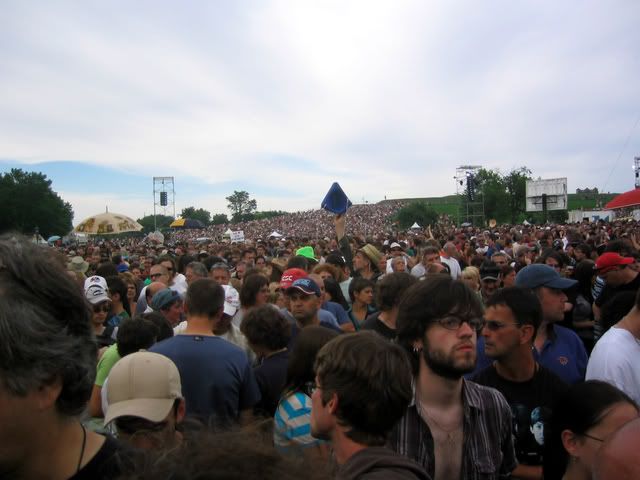
Over 200 000 people showed up for Sir Paul's free show on the Plains of Abraham, the historic battleground in Quebec City.
I went with a friend who's a huge Beatles fan, he dragged me outta bed at 4:30AM the morning of the concert so we could secure a spot in front of the stage.
We got to the park shortly after they opened the first "staging area" at 5AM and spent the day waiting in line, it wasn't exactly exciting but they at least piped the sound check through the sound system and let us listen in. At 5PM they opened the second staging area, behind the stage. Finally at about 5:45PM they threw the gates to the main site open and it was a free for all.
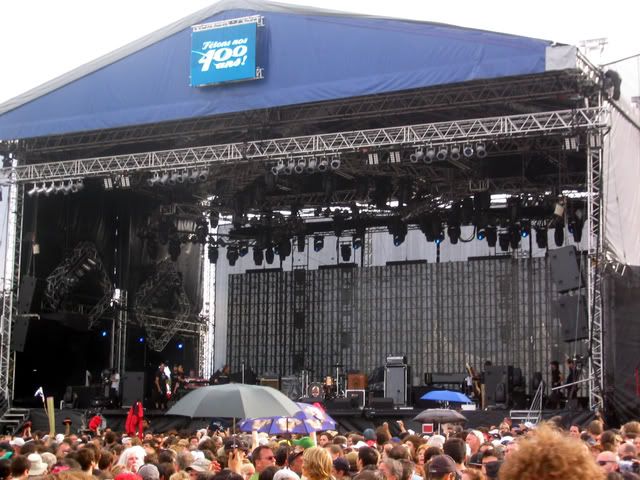
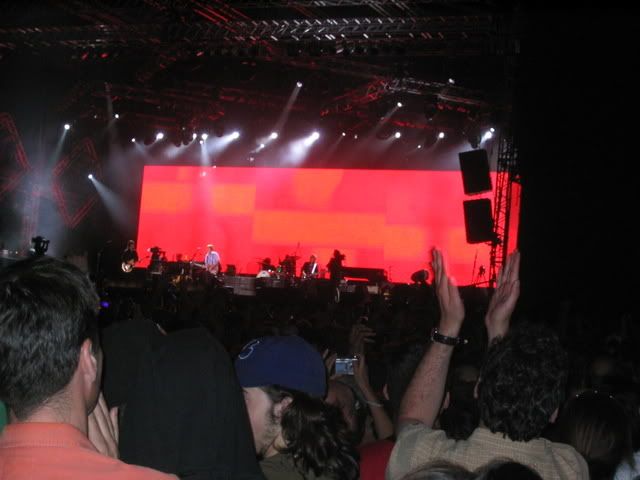
We managed to get a spot relatively close to the stage (about 100ft back), we could at least see the stage and had a good view of one of the giant screens. Looking back on the sea of humanity on the plains was surreal, you don't really have a mental concept of what 200 000 people look like until you see it for yourself. I hadn't been in a crowd that size since Soleil de minuit in Montreal.
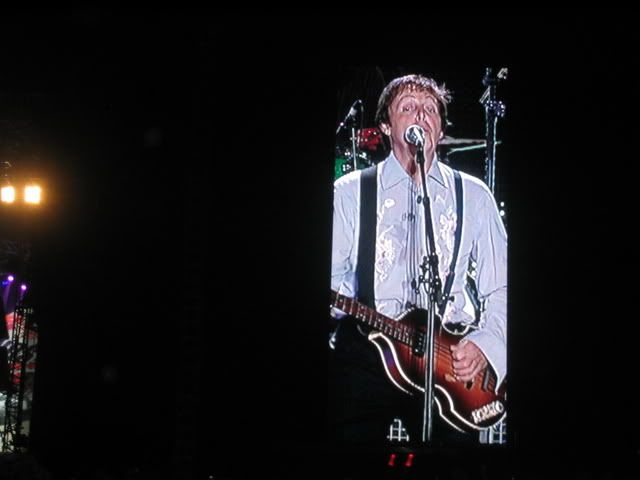
When Paul took the stage the roar from the crowd was deafening.
He played for about 2 and a half hours and along with his solo stuff and Wings stuff he threw in a bunch of Beatles songs; Let it Be, Drive My Car, Get Back, Eleanor Rigby, Blackbird, Yesterday, Sgt. Pepper's Lonely Hearts Club Band, Lady Madonna, Back in the U.S.S.R., he did Something as a tribute to George and a medley of A Day in the Life and Give Peace a Chance as a tribute to John and of course threw in Hey Jude.
While going in, I was really just a casual Beatles fan tagging along with my hardcore friend, leaving the concert I really felt I had experienced something special. It's definitely an experience I'll remember for a long time and in the end it was worth getting up at 4:30AM for.
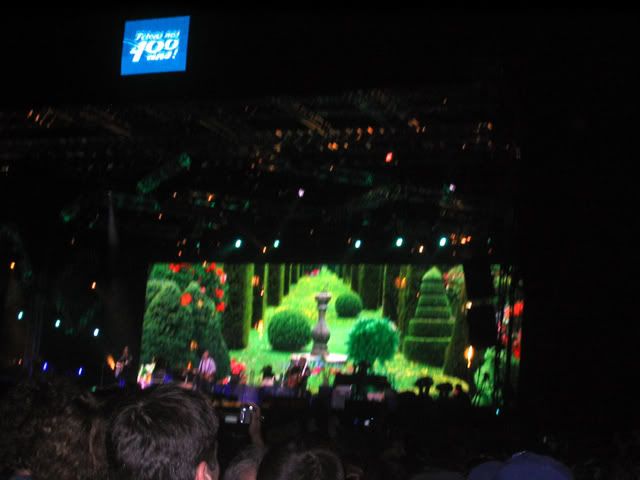
The crowd (really half the crowd, there was an equal amount on the other half of the hill that didn't fit in the frame):

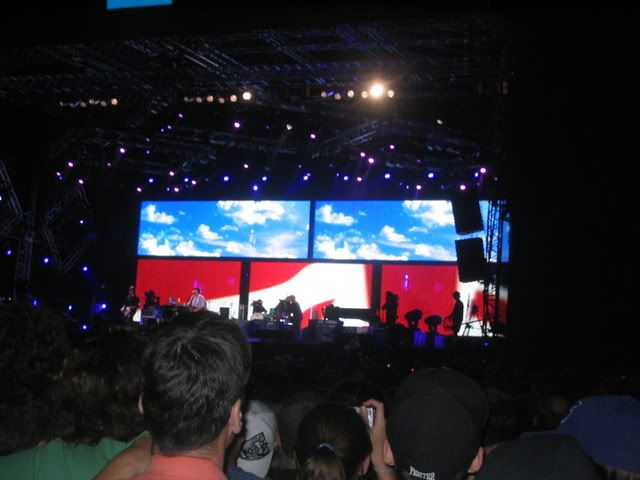
The stage:

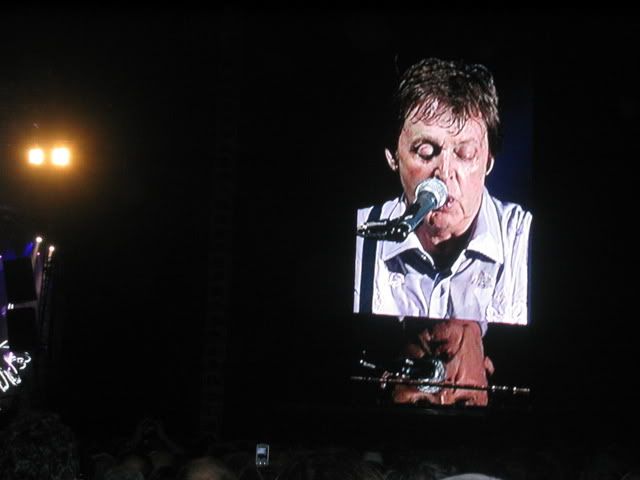
Paul takes the stage:


Over 200 000 people showed up for Sir Paul's free show on the Plains of Abraham, the historic battleground in Quebec City.
I went with a friend who's a huge Beatles fan, he dragged me outta bed at 4:30AM the morning of the concert so we could secure a spot in front of the stage.
We got to the park shortly after they opened the first "staging area" at 5AM and spent the day waiting in line, it wasn't exactly exciting but they at least piped the sound check through the sound system and let us listen in. At 5PM they opened the second staging area, behind the stage. Finally at about 5:45PM they threw the gates to the main site open and it was a free for all.
We managed to get a spot relatively close to the stage (about 100ft back), we could at least see the stage and had a good view of one of the giant screens. Looking back on the sea of humanity on the plains was surreal, you don't really have a mental concept of what 200 000 people look like until you see it for yourself. I hadn't been in a crowd that size since Soleil de minuit in Montreal.
When Paul took the stage the roar from the crowd was deafening.
He played for about 2 and a half hours and along with his solo stuff and Wings stuff he threw in a bunch of Beatles songs; Let it Be, Drive My Car, Get Back, Eleanor Rigby, Blackbird, Yesterday, Sgt. Pepper's Lonely Hearts Club Band, Lady Madonna, Back in the U.S.S.R., he did Something as a tribute to George and a medley of A Day in the Life and Give Peace a Chance as a tribute to John and of course threw in Hey Jude.
While going in, I was really just a casual Beatles fan tagging along with my hardcore friend, leaving the concert I really felt I had experienced something special. It's definitely an experience I'll remember for a long time and in the end it was worth getting up at 4:30AM for.
The crowd (really half the crowd, there was an equal amount on the other half of the hill that didn't fit in the frame):
The stage:
Paul takes the stage:
Sunday, May 11, 2008
Comme une pluie dans tes yeux . . .
There are stories that are not even stories, they're memories, only memories . . .
One must always remember
the first rainstorm of the season.
Don't open an umbrella.
Let the life fall on your body.
Happiness is like rain, it arrives instantaneously
and then it goes away when it wants.
That kind of memory never fades.
Once in a while you come across a work of art that stirs your emotions, that makes you pine nostalgically for days past.
I enjoyed Rain by Cirque Éloize so much.
I love director Daniele Finzi Pasca's approach of using subtle, artful melancholy to invoke nostalgia. The show is simple but the results are beautiful and moving.
I really hope to see the new Éloize show Nebbia soon. Even if it is just more of the same, it's a style that really appeals to me.
One must always remember
the first rainstorm of the season.
Don't open an umbrella.
Let the life fall on your body.
Happiness is like rain, it arrives instantaneously
and then it goes away when it wants.
That kind of memory never fades.
Once in a while you come across a work of art that stirs your emotions, that makes you pine nostalgically for days past.
I enjoyed Rain by Cirque Éloize so much.
I love director Daniele Finzi Pasca's approach of using subtle, artful melancholy to invoke nostalgia. The show is simple but the results are beautiful and moving.
I really hope to see the new Éloize show Nebbia soon. Even if it is just more of the same, it's a style that really appeals to me.
Sunday, February 24, 2008
Double Double Toil and Trouble, Electric Guitarias and La Habañera
We're in the full thick of winter now and it's COLD, the days are still short and it's too miserable outside to do anything. I've been taking in some performing arts events this past week to get through the boredom of the winter doldrums:
Macbeth
I took in a performance of The National Arts Centre's production of Macbeth. I studied Macbeth in Grade 11 English Lit but this is the first time I've seen a live-stage version (if you don't count MacHomer a one-man version of Macbeth done with the Simpson's characters). I'd been to other NAC productions of Shakespearean plays before (Othello, Hamlet and Love's Labour's Lost) but I found them lacking. If you have a play like Hamlet that's been staged thousands of times you really need to give it a fresh point of view to make it relevant to contemporary audiences otherwise it's just a costume pageant.
The Macbeth director understood that, he transposed the setting of the play to World War II era Europe and made really effective use of the symbols of that era; air raid sirens, bombs, scratchy radio broadcasts and he appropriated Nazi/fascist iconography to underscore the ruthless tyranny of the Macbeths' ascent to power. I thought setting the play in WWII was a brilliant choice since it allows the audience to draw modern parallels to the story plus Second World War imagery still invokes a visceral reaction in today's audiences.
Another interesting choice the director made was casting children in the role of the Witches ("Double double toil and trouble"), it made for a creepy effect in addition to underlining war's toll on the innocent.
I also loved how he staged the final act, the siege of Dunsinane castle by MacDuff and Malcolm's troupes. He had actors in World War II combat gear crawling around the stage like in a trench battle then, once inside the castle they were ducking around corners like the door-to-door combat of the Italian campaign. And then for the final showdown between Macbeth and MacDuff; a good old-fashioned Shakespearean sword fight. It made for some great theatre.
I also liked the production design, at the back of the stage they had this semi-transparent frosted-glass divider and when performers stood behind it they could be lit to give a ghostly aura which was a simple but really cool-looking effect.
The East Village Opera Company
Last weekend I went to a concert by EVOC, a band that does Rock-arrangements of operatic arias. It was a special concert being recorded for CBC Radio and they were trying out a bunch of stuff from their upcoming album.
I love this band they have some really original ideas for the arrangements and they totally rock.
For the second encore they performed one of my favourite songs of theirs; When I am Laid in Earth (Dido's Lament) from the opera Dido and Aeneas by Henry Purcell. Dido, Queen of Carthage sings this aria at the end of the opera after her lover Aeneas has left her and she decides to commit suicide. She pleads to be remembered for the way she lived her life and not how she chooses to end it. The EVOC arrangement puts another melody, a lullaby for a child, in counterpoint and it gives this amazing sense of drama. It starts off subtly with Indian tablas and then builds to the electric guitar crescendo. I love it!
Carmen, The Passion
Tonight I attended a performance of Carmen, The Passion by the Royal Winnipeg Ballet. It's an adaptation that takes one of the most famous operas and transforms the story for dance.
The ballet featured an original score. I was unsure about that decision since the Bizet score is so iconic but I enjoyed the original composition, it featured a lot more authentic Andalusian stylings and references plus setting the ballet to an original score really helps the viewer focus on the story.
The staging was minimal; the set consisted of some scaffolds and projection screens. Unfortunately, the projections looked like cheap Winamp visualizations. I understand they were used to fill in the negative space overhead but they didn't add anything to the scene and since I was close enough that the dancers filled my field of view I just found the projections distracting.
The dancers were good, I always marvel at the training and discipline it takes to dance ballet. When I saw the RWB's performance of Dracula a couple seasons ago I thought that production lacked some of the passion, gothic darkness and sensuality that the Dracula story allows. Their Carmen however was passionate and full of sexual energy, it was hot!
Macbeth
I took in a performance of The National Arts Centre's production of Macbeth. I studied Macbeth in Grade 11 English Lit but this is the first time I've seen a live-stage version (if you don't count MacHomer a one-man version of Macbeth done with the Simpson's characters). I'd been to other NAC productions of Shakespearean plays before (Othello, Hamlet and Love's Labour's Lost) but I found them lacking. If you have a play like Hamlet that's been staged thousands of times you really need to give it a fresh point of view to make it relevant to contemporary audiences otherwise it's just a costume pageant.
The Macbeth director understood that, he transposed the setting of the play to World War II era Europe and made really effective use of the symbols of that era; air raid sirens, bombs, scratchy radio broadcasts and he appropriated Nazi/fascist iconography to underscore the ruthless tyranny of the Macbeths' ascent to power. I thought setting the play in WWII was a brilliant choice since it allows the audience to draw modern parallels to the story plus Second World War imagery still invokes a visceral reaction in today's audiences.
Another interesting choice the director made was casting children in the role of the Witches ("Double double toil and trouble"), it made for a creepy effect in addition to underlining war's toll on the innocent.
I also loved how he staged the final act, the siege of Dunsinane castle by MacDuff and Malcolm's troupes. He had actors in World War II combat gear crawling around the stage like in a trench battle then, once inside the castle they were ducking around corners like the door-to-door combat of the Italian campaign. And then for the final showdown between Macbeth and MacDuff; a good old-fashioned Shakespearean sword fight. It made for some great theatre.
I also liked the production design, at the back of the stage they had this semi-transparent frosted-glass divider and when performers stood behind it they could be lit to give a ghostly aura which was a simple but really cool-looking effect.
The East Village Opera Company
Last weekend I went to a concert by EVOC, a band that does Rock-arrangements of operatic arias. It was a special concert being recorded for CBC Radio and they were trying out a bunch of stuff from their upcoming album.
I love this band they have some really original ideas for the arrangements and they totally rock.
For the second encore they performed one of my favourite songs of theirs; When I am Laid in Earth (Dido's Lament) from the opera Dido and Aeneas by Henry Purcell. Dido, Queen of Carthage sings this aria at the end of the opera after her lover Aeneas has left her and she decides to commit suicide. She pleads to be remembered for the way she lived her life and not how she chooses to end it. The EVOC arrangement puts another melody, a lullaby for a child, in counterpoint and it gives this amazing sense of drama. It starts off subtly with Indian tablas and then builds to the electric guitar crescendo. I love it!
Carmen, The Passion
Tonight I attended a performance of Carmen, The Passion by the Royal Winnipeg Ballet. It's an adaptation that takes one of the most famous operas and transforms the story for dance.
The ballet featured an original score. I was unsure about that decision since the Bizet score is so iconic but I enjoyed the original composition, it featured a lot more authentic Andalusian stylings and references plus setting the ballet to an original score really helps the viewer focus on the story.
The staging was minimal; the set consisted of some scaffolds and projection screens. Unfortunately, the projections looked like cheap Winamp visualizations. I understand they were used to fill in the negative space overhead but they didn't add anything to the scene and since I was close enough that the dancers filled my field of view I just found the projections distracting.
The dancers were good, I always marvel at the training and discipline it takes to dance ballet. When I saw the RWB's performance of Dracula a couple seasons ago I thought that production lacked some of the passion, gothic darkness and sensuality that the Dracula story allows. Their Carmen however was passionate and full of sexual energy, it was hot!
Subscribe to:
Posts (Atom)